
A Truth I Had No Name For
What I found in Fatima began long before I ever set foot there. I do not remember how I came across the article, but I remember it arriving at the moment I needed it most. At the time, I was reading without pause, book after book, looking for a truth I could not yet name. The books were not on the bestsellers list, nor were they written by authors chasing recognition. Instead, they spoke of extraordinary experiences, testimonies of ordinary people who had lived through something profound, never meant to be kept hidden. They were people entrusted to spread a message, passed from one life to another until it found its way to me.
I had grown up in the Christian faith, and as a child I sensed God moving through my life. But beneath my faith, I carried a loneliness I could not explain, as if I were searching for a destination I could never reach. It was not the loneliness of being unloved or unseen. It was the ache of knowing God was near while sensing more waited beyond what I had been taught to see. I trusted Him without question, but the ache did not leave me. What I had not yet learned was that God, as I had understood Him, belonged to a much larger truth than I had ever imagined.
The article was about Fatima, Portugal. It told of three children who had seen a woman appear before them in a field, a woman “more brilliant than the sun.” They called her a beautiful lady, though she would come to be known, and venerated, as Mary, the mother of Jesus. She is one of the most recognized figures in the Christian faith, believed by millions around the world to appear to ordinary people in extraordinary ways. I could not stop thinking about it.
I found a book written by Lucia dos Santos, the eldest of the three children, who had stood in the field and seen Mary with her own eyes. Lucia’s words gave shape to the ache I had carried for years, pulling me to venture past the written page, to stand where the children had stood — not to prove anything, but because the truth I had been searching for might be found in Fatima.
Before I Ever Arrived
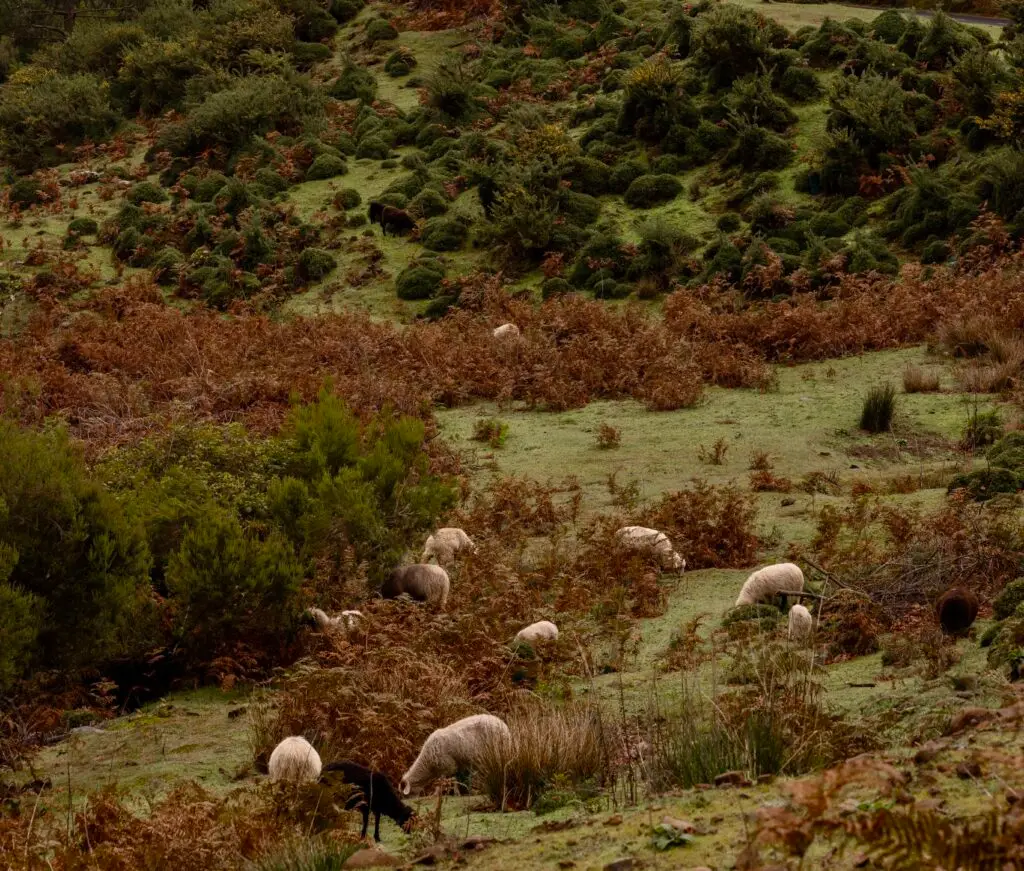
Before I set off for Fatima, I returned to Lucia’s book and read it in full. The deeper I went, the clearer one thing became. Fatima was not a story about distant saints or holiness kept out of reach. It was a story about three shepherd children, Lucia and her cousins Francisco and Jacinta Marto, growing up in a poor farming village, younger than I had pictured. Each had been handed a burden none of them had asked to carry. Like most children in Cova da Iria, they spent their days watching the family flocks on the hillsides. Nothing in their lives suggested they would be remembered a century later by millions of people.
The apparitions began in 1917, on the thirteenth of May, while the three children were tending sheep in Cova da Iria. They said a flash of light broke across the sky, followed by Mary herself, standing on a small holm oak tree. Lucia would later describe her as “a Lady all dressed in white, more brilliant than the sun.” Frightened at first, the children turned to run, but Mary’s voice was gentle. “Don’t be afraid. I will not harm you.” She asked them to return to the same spot on the thirteenth of each month, and to pray for peace. The children rushed home to tell their families, but they were greeted differently. Francisco and Jacinta’s parents believed them, but Lucia’s mother did not, ashamed of the attention her daughter was drawing, pressuring her, again and again, to take back what she was claiming. For Lucia, doubt began at home, but her mother was not the first person to question a witness to a miracle. I had already learned what doubt could do to a witness.
Half a year earlier, I had made a different pilgrimage, to Lourdes, France, without understanding why, only knowing I had been called there too. Lourdes was where Mary was said to have appeared to a poor peasant girl named Bernadette, who described the woman as “a lady, young and beautiful, exceedingly beautiful, the like of whom I had never seen.” The people around her saw only a girl kneeling before a presence invisible to everyone but her. She was fourteen when the questioning began, first by police, then by skeptics who accused her of lying, of being unwell, of inventing the whole affair. No one could confirm what only she had seen, and for years even the Church doubted her. No one stood beside her.
Bernadette had carried the weight of a miracle alone, and learning what she endured stayed with me. Her story revealed a new truth: since childhood, I had believed the divine presence in my life was God, and God alone, until Bernadette proved otherwise. There was also Mary, a presence just as real. Through Bernadette, I began to see a world beyond the visible eye, holding many divine presences, accessible to anyone willing to believe. Bernadette’s testimony was hers alone; no other pair of eyes could confirm what she had seen. Realizing the children of Fatima had witnessed together, not alone as Bernadette had, made the new world begin to shine brighter in my life.
The Field of Eighty Thousand
By October, word had spread beyond the countryside around Fatima. Newspapers, including several hostile to the Church and quick to dismiss the whole affair as superstition, sent reporters to cover what they expected would be a public embarrassment for the credulous. The children were under immense pressure, but Mary promised them a miracle to make everyone believe. By the morning of October 13, the roads leading to Cova da Iria were packed with people. Some had walked for days, soaked by weeks of autumn rain, the fields turned to mud beneath them. Estimates of the crowd reached as high as eighty thousand people, ordinary men and women standing shoulder to shoulder in a field, waiting to find out if three children had been telling the truth. It was the same ground I had walked myself, now home to the sanctuary raised there, a short distance from the homes where the children had once lived.
Then the sky broke open. The rain stopped, the clouds split apart, and the sun began to spin, throwing off bands of red and blue and gold across the crowd. Witnesses reported the sun zigzagging across the sky, tearing loose and plunging like a rocket toward the earth. Thousands of people screamed, certain the world was ending and just when it seemed the sun would crash into the ground, it stopped. Before their astonished eyes, they watched it ease back into its place in the sky, as if nothing had happened. People who had stood for hours in soaked, mud-caked clothing found themselves dry. The reporters took pictures, and even they could not dispute what had happened. The same day, Mary gave the children her name. “I am Our Lady of the Rosary,” she told them.
After reading about the miracle of the sun, I was left with a question: why is no one talking about it? The miracle was no longer a private vision bestowed on a handful of believers; journalists sent to debunk the miracle had stood among them too, and yet many people, myself included, had never heard of what happened in Fatima. Bernadette had carried her miracle alone. The three children of Fatima had carried theirs together. On the same muddy field, eighty thousand more bore witness. God, the presence I had sensed since childhood, and Mary, the presence Bernadette and the three children had seen, were not two separate stories. They belonged to the same vast world I had begun to believe in at Lourdes, a world large enough to hold eighty thousand witnesses, and large enough to hold me too. I was not alone. I had never been alone.
By the time I left Fatima, I understood why I had been guided there.
What Remained
The children did not all live to see what their testimony would become. Mary had told Bernadette, decades earlier: “I do not promise to make you happy in this world, but in the next.” Her words to Francisco and Jacinta were just as direct: “I will take you both to heaven soon, but Lucia must stay here a little longer.” Mary’s prophecy proved true, for all of them. Bernadette suffered for years and died at thirty-five. Francisco and Jacinta died within a few years, victims of the influenza pandemic sweeping the world in 1918. Francisco died in 1919, at the age of ten. Jacinta died in 1920, at the age of nine. Lucia alone lived a long life. She entered a religious order, became a Carmelite nun, and lived until 2005, long enough to see her two young cousins canonized as saints and to see the story she had guarded since childhood become known throughout the world.
A miracle witnessed by one person can be dismissed as a delusion. A miracle witnessed by three children can be dismissed as a shared delusion, or a lie agreed upon in advance. A miracle witnessed by eighty thousand people, standing in a muddy field on an ordinary Saturday, is harder to argue away. But for me, Fatima was never an argument to be won. It was the place where the ache I had carried alone for years became certainty: there is more to the world than what I can see with my eyes. I don’t remember how I found the article. What I know is where it led me: to stand on the same ground where eighty thousand people once stood, looking up into the same sky. No longer alone. And certain of it.
Author’s Note
I was led, step by step and without understanding, toward a truth larger than any I had known. Fatima entered my life through books, through witnesses, through the ache I had carried for years. I write in gratitude for the path that opened before me, and for the ache that became certainty.